
Sackable Offence, Payable Outcome
It’s cheaper to lose than win - April 8, 2026
Imagine running a garbage truck company and having an employee who racked up two speeding fines and, upon receiving a message to stop texting and driving, responded with “what are you gonna do sack me?”
Further imagine that same driver leaving pornographic material in the workplace and dumping hard rubbish at an “inappropriate” site.
Now imagine terminating said driver only to learn an unfair dismissal claim has been made against you. An increasingly common occurrence in modern day Australia.
Here, however, this is a real case and after going through the process, the Fair Work Commission (FWC), despite accepting there were valid reasons to dismiss him, still ruled the termination unfair because of procedural defects.
This isn’t an abnormality. It’s the system working exactly as designed.
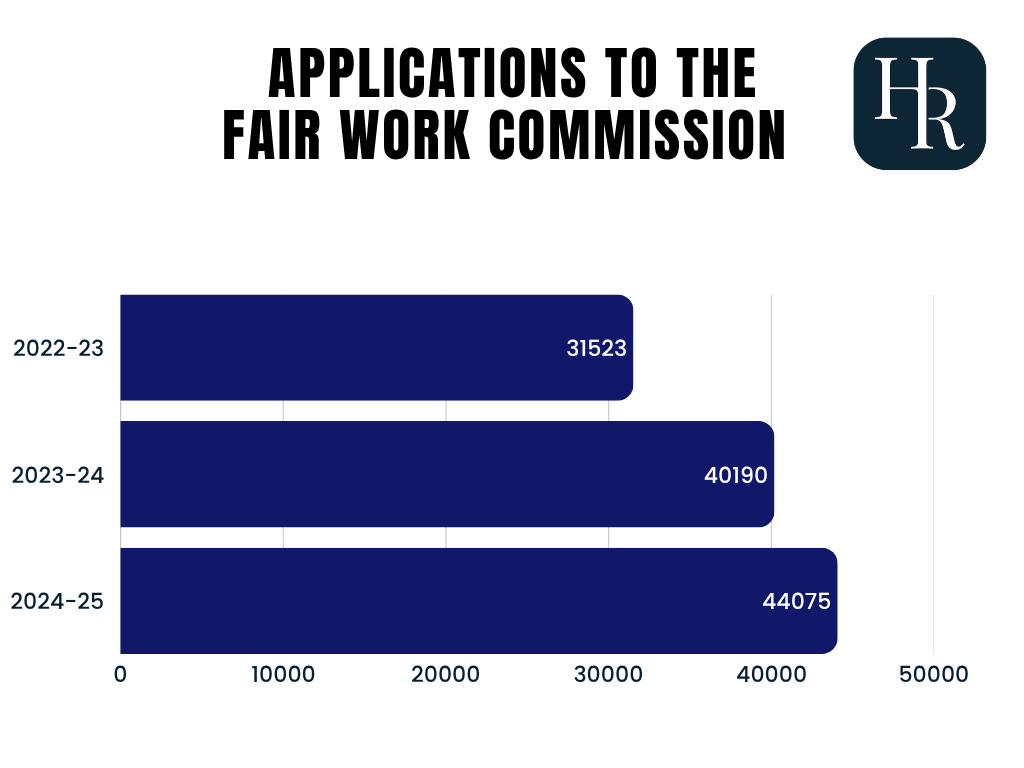
The numbers are staggering. Applications to the FWC have surged past 44,000 a year, with unfair dismissal claims alone hitting 16,500 – a 50 per cent increase on just two years ago.
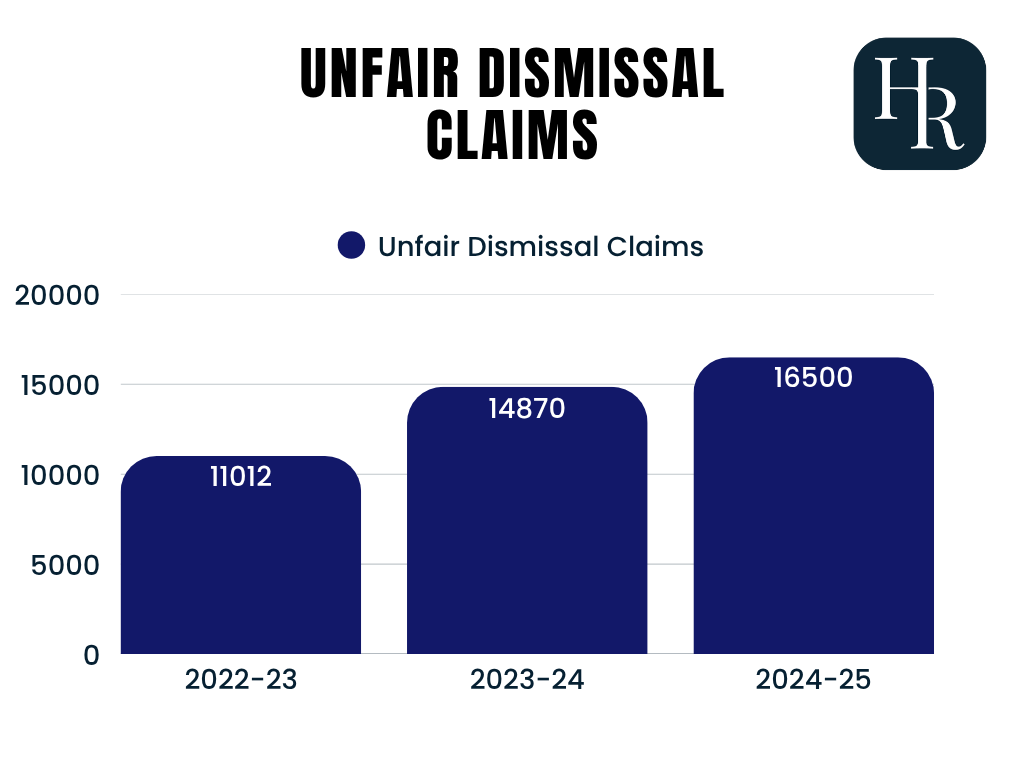
Match that with a 40 per cent increase in applications to the Commission over the same period and now even Commission’s own President, Adam Hatcher, admits the system is creaking under the weight. Faced with the latest surge, he reportedly “reached for the brown paper bag.”
When the umpire is hyperventilating, the game has gone well beyond regulation.
But the real issue isn’t just the surge in claims. It’s why they’re being made.
Australia has quietly engineered one of the easiest systems in the world for lodging a dismissal claim. For less than the price of half a tank of petrol (under $90) you can drag your former employer into a legal process that consumes time, money and attention for weeks or months.
No evidence required upfront. No real penalty if you lose. And, crucially, no downside if you don’t even bother showing up.
The framework is fast incentivising itself as a default rather than a mechanism to remedy real dismissal issues. And unsurprisingly, people are using it as such.
The data makes for heavy reading. Of thousands of claims lodged each quarter, barely 1 per cent result in a formal finding that a dismissal was actually unfair.
One per cent.
And as more than 90 per cent of cases are settled before reaching a decision. This should tell you everything you need to know.
The system isn’t primarily resolving injustice. It is facilitating transactions.
Employers, especially small businesses, face a simple choice: spend tens of thousands of dollars and countless hours defending a claim they will probably win, or pay a few weeks’ wages and make it disappear.
In an entirely predictable twist, they choose the latter.
Welcome to the “go away money” economy.
The median compensation for successful claims is around 5 to 7 weeks’ pay or over $8,700. On last years figures this equates to over $143 million in payouts.
The Australian Financial Review has reported that advisory firms are now mass-producing templated dismissal claims, sometimes using AI, designed not to win but to settle.
In one particularly telling case, an applicant lodged a claim, paid the fee, and then effectively vanished - ignoring directions, skipping hearings, and failing to prosecute the matter, while the employer was still forced to turn up, prepare evidence, and incur costs.
The Commission itself concedes this behaviour is common. Weekly “non-compliance hearings” now exist just to deal with applicants who can’t be bothered participating in the claims they initiated.
Only in Australia’s industrial relations system could that be considered normal.
It is not enough that an employer has a valid reason for dismissal. The Commission must also decide whether the decision was “harsh, unjust or unreasonable”, a phrase so elastic it could cover almost anything.
Back to garbage truck drivers for a further example. The FWC Full Bench in Barber v Veolia Recycling and Recovery Pty Ltd, overturned an initial decision upholding the dismissal of a long-serving garbage truck driver for a low-level alcohol policy breach (0.007 BAC) and prior safety incidents, including vehicle crashes, improper operation, speeding, and confidentiality violations.
While acknowledging a valid reason for dismissal, the Full Bench ruled it harsh given Barber's 16-year tenure, remorse, and personal circumstances like a mortgage and family responsibilities.
Despite Veolia's compliance with investigations and warnings, reinstatement was ordered, prioritising unremarkable employee factors over the employer's duty to ensure workplace safety, illustrating how tribunals can elevate subjectivity and procedural technicalities above substantive risks in high-hazard roles.
The garbo cases prove a point. Misconduct? Tick. Valid reason? Tick. Compensation or reinstatement anyway? Also tick.
For large corporates, this is an irritant. For small businesses, it’s a deterrent to hiring altogether.
They don’t have HR departments or in-house counsel. They have a roster, a payroll, and a mortgage.
So they adapt. They hire more cautiously, tolerate underperformance longer, or they simply don’t hire at all.
And that’s where this stops being a legal curiosity and becomes an economic problem.
Research shows stricter dismissal laws reduce productivity by making it harder for businesses to adjust their workforce and take risks on new hires.
When firing becomes fraught, hiring becomes fearful which is why reform is overdue and why it needs to be practical.
The H.R. Nicholls Society has proposed a simple but powerful fix: lift the definition of a small business from 15 employees to 50 and raise the fee of an unfair dismissal claim beyond its trivial amount.
At first glance, it sounds like a technical tweak. In reality, it’s a pressure release valve.
It would extend the 12-month qualifying period before an unfair dismissal claim can be made to a much larger group of businesses giving employers time to assess employees properly without the immediate threat of being marched into a tribunal.
In other words, it restores a concept that should not be controversial: that a job should last long enough to be judged before it becomes litigated.
Right now, the system invites the opposite behaviour. If you get dismissed just file a claim for a small fee. See what happens and roll the dice.
That is not a safeguard. It is a strategy.
Australia does not have a problem with too little protection against unfair dismissal. It has a problem with a system that is so easy to game that dismissal claims have become speculative rather than substantive.
Until that changes and there are real consequences for unmeritorious claims and a rebalancing of incentives, modern Australia will remain the place where it’s often cheaper to lose than to win.
James Mathias
Executive Director
